
Freeze-thaw · UV · Chinook cycles
Calgary is genuinely hard on outdoor surfaces. Forty-degree swings, intense UV at altitude and a freeze-thaw season that finds every weakness. Only two materials really survive it.
The mistake we get called about every spring is the same one: quartz installed outdoors. The resin binder breaks down under UV, the colour yellows, the surface degrades, and virtually every manufacturer voids the warranty for exterior use.
It isn’t a marginal call or a risk you can manage with a cover. Do not put quartz outside in Alberta. Any installer who agrees to is either not reading the warranty or hoping you won’t.
What does work: porcelain, which is fully UV-stable with near-zero water absorption, and granite, a natural igneous stone that has spent rather longer outdoors than your patio has. Both handle chinook cycles without complaint.
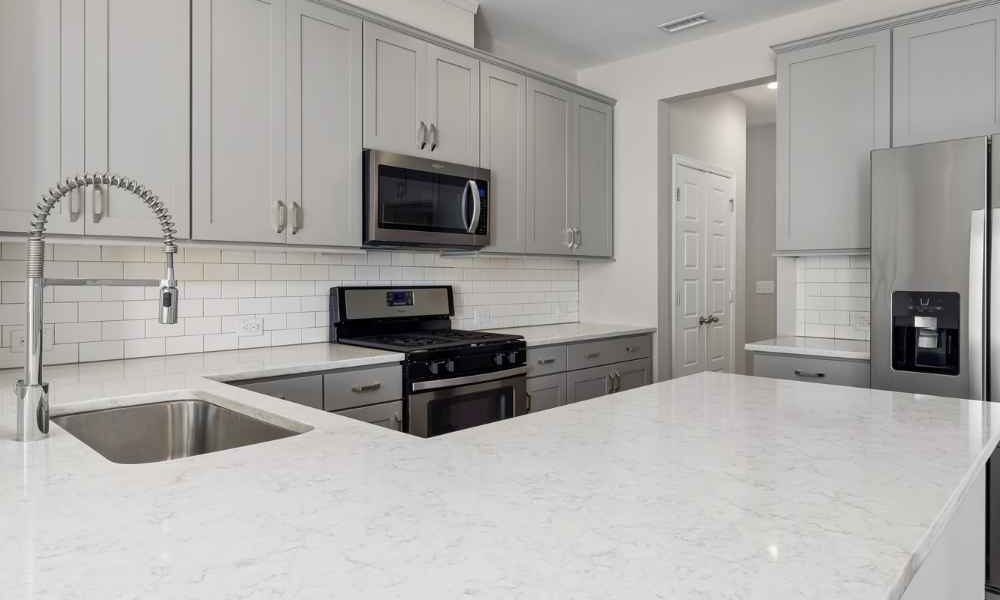
by material
Material decides your budget, your maintenance and roughly 80% of the final look. Room and layout come after.
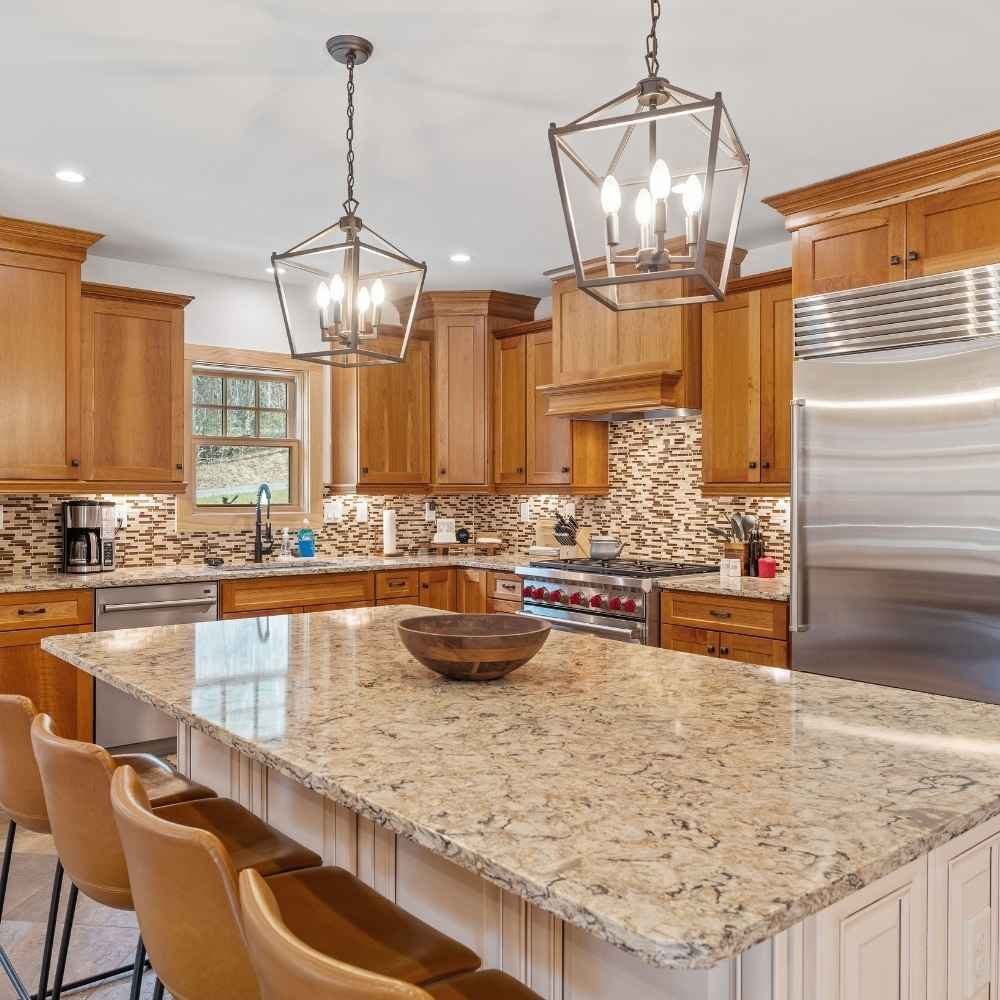
Hardest-working natural stone. Heat-proof, unique slab to slab, needs sealing once a year or so.
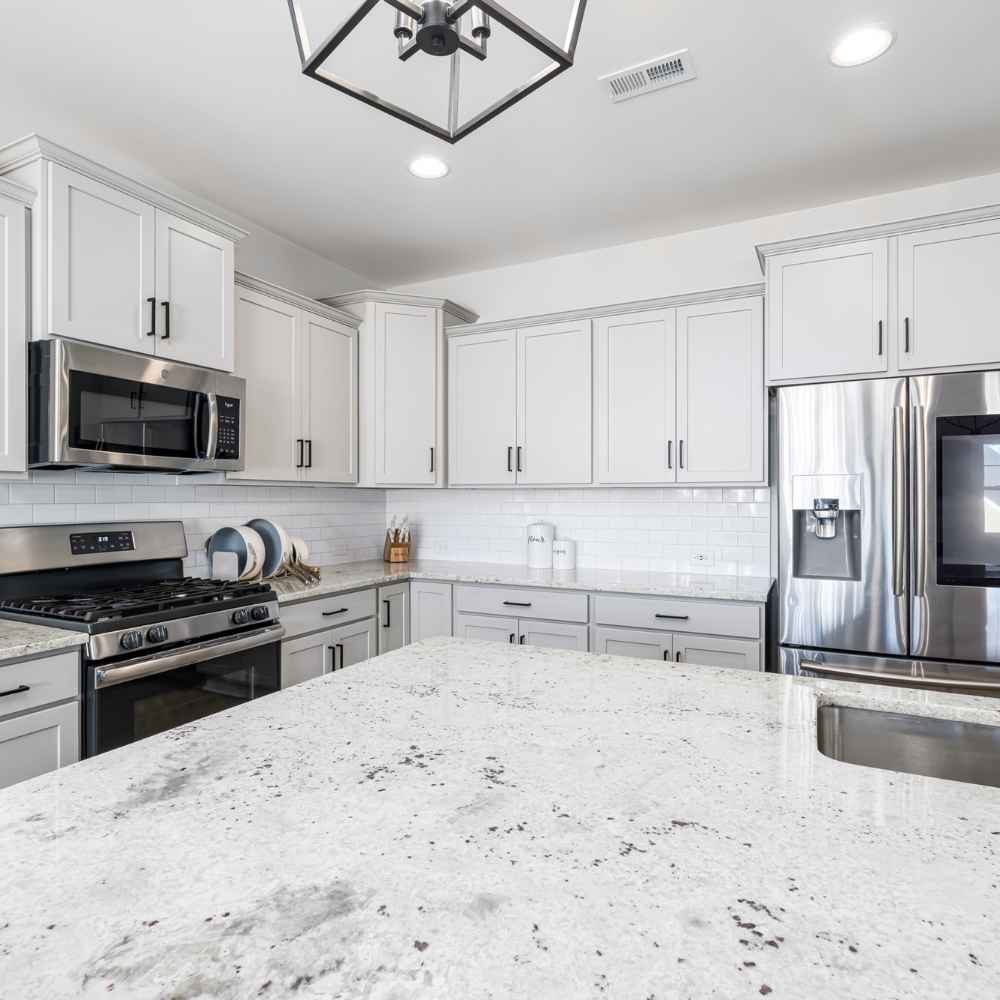
Non-porous, consistent, zero sealing. Calgary's most-requested surface — and the most forgiving.
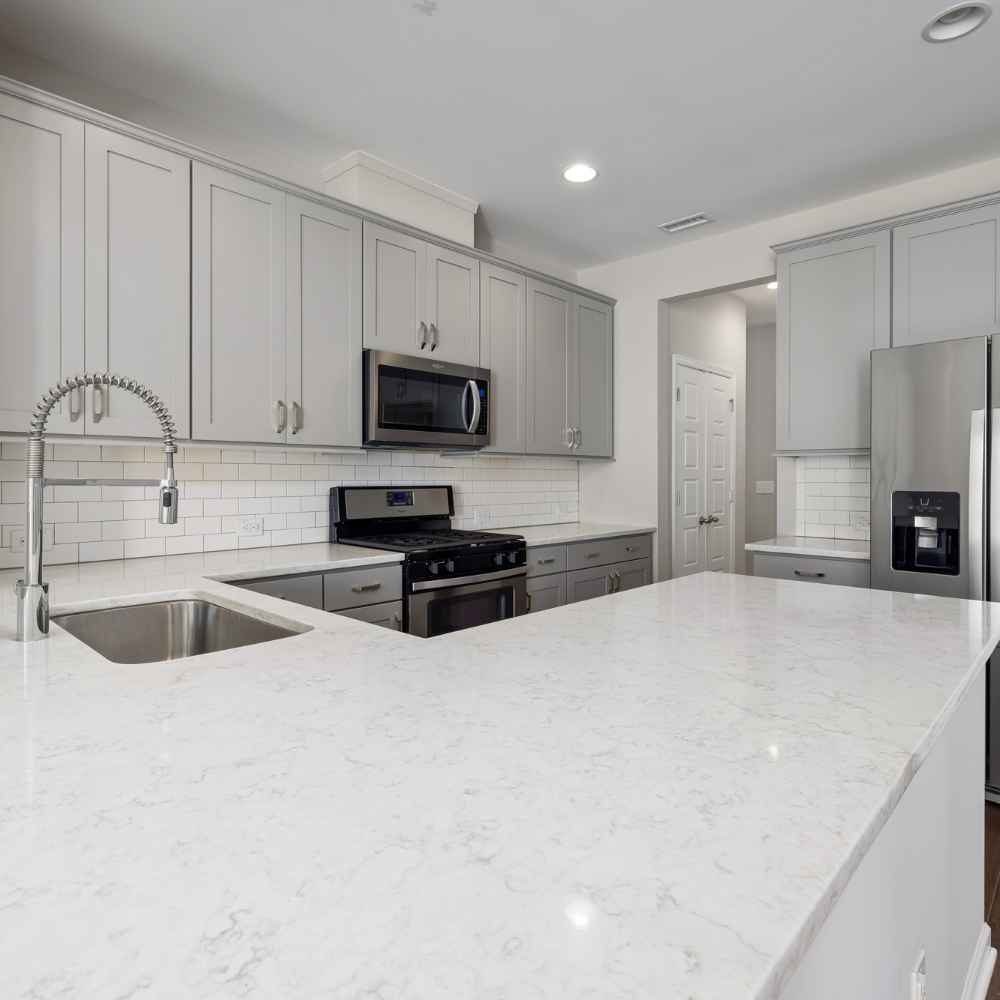
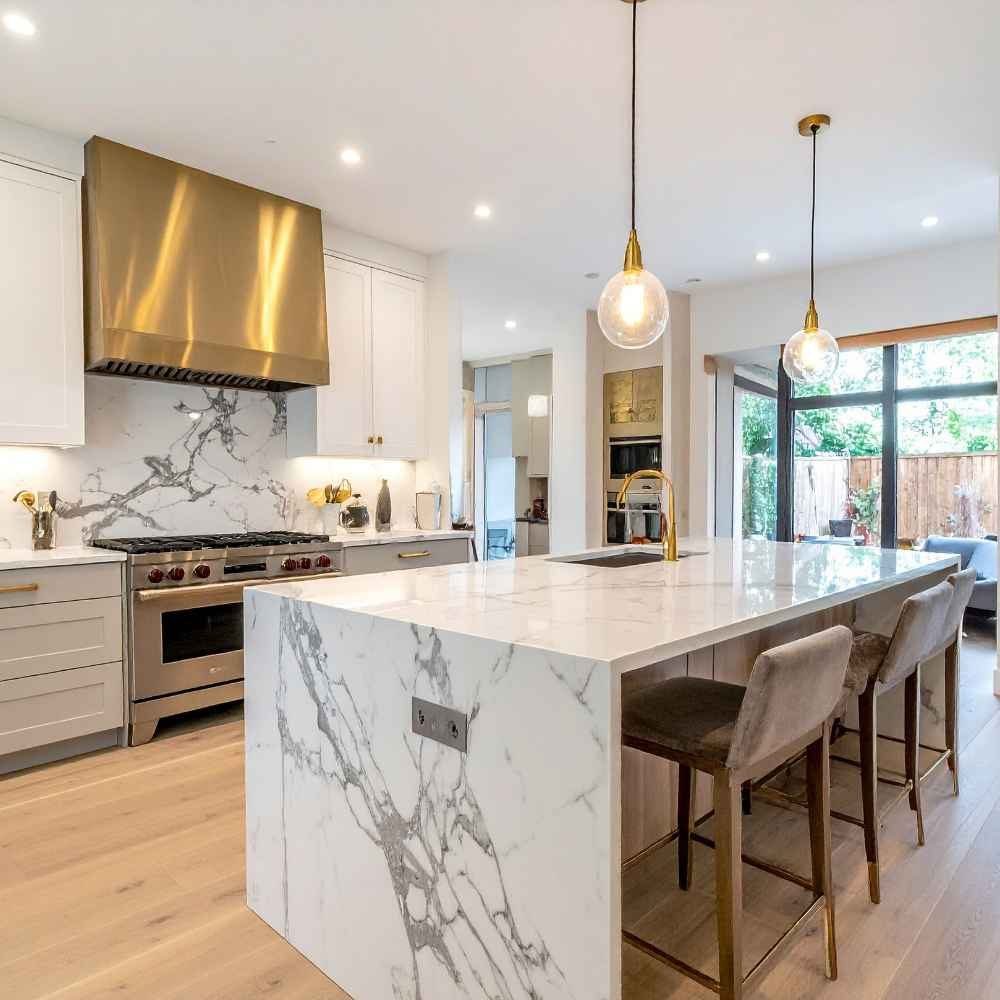
Nothing else looks like it. Etches and patinas are beautiful if you want it to age,
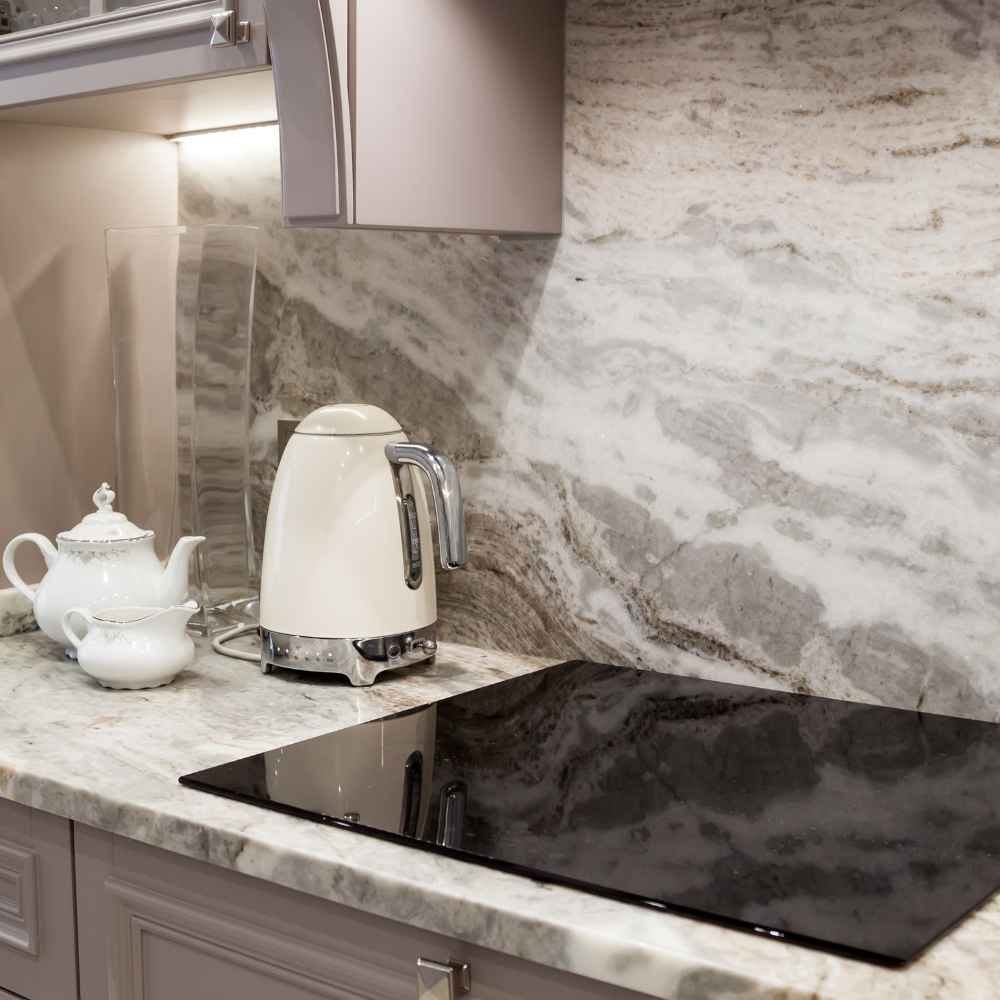
Marble's face, granite's durability. Genuinely hard — but half the market is mislabelled, so testing matters.
UV-stable, scorch-proof, only 6–12 mm thick. The right answer for outdoor kitchens and full-height slab walls.
Material
| Material | Outdoors in Calgary | Why |
|---|---|---|
| Porcelain | Best choice | Near-zero porosity means no absorbed water to freeze and expand. Fully UV-stable, so no fading over years of sun. |
| Granite | Excellent | Dense, UV-stable, handles direct heat from a grill. Needs sealing twice a year outdoors rather than once. |
| Quartzite | Good | Hard and UV-stable. More porous than granite, so stay on top of sealing. |
| Marble | Not recommended | Porous, soft, and acid rain etches it. It will not look good after two Calgary winters. |
| Quartz | Do not use | UV degrades the resin binder — yellowing, then surface failure. Warranty is void outdoors. |
Build details
Outdoor cabinets need to be non-combustible and moisture-tolerant — steel frame with cement board, or a masonry base. Standard kitchen cabinetry will not survive out there, and stone laid on a substructure that moves through the winter will crack regardless of how good the slab is.
Water must run off, not pool. A slight fall away from the house and a slab set proud of the base means meltwater leaves rather than sitting in a seam and freezing. Sealed seams and a properly detailed drip edge are what keep water out of the assembly.
Both porcelain and granite handle grill heat, but the cut-out for a built-in unit must follow the appliance manufacturer’s clearance specification exactly, and the surrounding structure must meet it too. We fabricate to the appliance spec sheet — send it to us before template.
Outdoor bar overhangs need the same steel support as any interior island, and arguably more since outdoor structures take snow load and thermal movement. On porcelain we generally recommend 20 mm outdoors rather than 12 mm for the extra robustness.
Seasonal
Outdoor kitchen work in Calgary runs from roughly April to October, and the calendar fills fast — booking in February or March for a summer install is normal, and leaving it to June often means waiting. Winter installation is possible if the base structure is already in place and access is clear, but sealing and epoxy curing want temperatures above freezing.
For winterising, the stone itself needs nothing beyond a good seal in the fall. What needs attention is plumbing: shut off and drain any outdoor sink line before the first hard freeze. A cover over the counter keeps debris and ice off, but the stone is not the vulnerable part of the assembly — the water lines are.
How it runs
01.
You see the actual slab, not a sample chip. Natural stone varies enormously across a single block, and a photo of “Black Pearl” tells you nothing about the piece that ends up in your kitchen.
02.
We laser-template after your cabinets are set and levelled. This is also when we walk you through seam placement — where the joins land, and why. Nobody should find out about a seam after it’s cut.
03.
CNC cutting, sink and cooktop cut-outs, edge profiling and polishing in our own shop. Nothing is sent out, which is why we can turn a template around in roughly ten working days.
04.
Levelling, setting, seaming and sealing, typically in a single day for a standard kitchen. Old tops removed and hauled away if you need that.
/ FAQs
We don't recommend it even under cover. UV reflects and scatters, temperature swings still apply, and manufacturer warranties generally exclude exterior installation regardless of cover. Use porcelain or granite instead.
Not if it's sealed and the substructure is sound. Granite has extremely low porosity and handles freeze-thaw well. Cracking outdoors nearly always traces back to a base that shifted or to water pooling in an unsealed seam.
Roughly twice a year for granite and quartzite outdoors, ideally spring and fall. Porcelain never needs it. The fall seal matters most, since that's the one carrying the stone through freeze-thaw season.
Mid-tones and lighter stones stay cooler in direct sun — a black granite counter in July sun gets genuinely too hot to lean on. Lighter surfaces also show less of the dust and pollen that accumulate outdoors.
Sometimes, if the base is already built and there's clear access. Sealing and seam epoxy need above-freezing temperatures to cure properly, so a cold snap will push the finishing work. Spring booking is more predictable.
A simple eased or mitred edge sheds water best. Avoid profiles with grooves or channels that trap moisture, since anything holding water is a freeze-thaw problem waiting to happen.
Free measure and quote across Calgary, Airdrie, Cochrane, Chestermere and Okotoks. No obligation, no showroom pressure.
Crescent Granite templates, fabricates and installs custom kitchen and bathroom countertops across Calgary — in-house, on schedule, and built to outlast the reno.
Copyright © 2026 Crescent Granite