
Vanities · Remnant pricing on small tops
The one place stone you’d never risk in a kitchen makes complete sense. No hot pans, no lemon juice, no cutting — just water.
A vanity top is small, which changes the economics completely. A single kitchen slab has offcut left over, and that offcut is exactly the right size for a bathroom — which is why a marble you couldn’t justify in the kitchen becomes very affordable here.
Ask about remnants. We keep a rack of them, and for a standard 900 mm or 1200 mm vanity there’s frequently a piece of something excellent sitting there for a fraction of what a new slab would cost. Powder rooms in particular are worth doing this way — small, high-impact, and nobody is going to chop vegetables on it.
The bathroom is also where marble stops being a maintenance argument. The acids that etch it live in kitchens, not bathrooms. Wipe up toothpaste and nail polish remover promptly, seal it on schedule, and a marble vanity will look beautiful for decades.
by material
Material decides your budget, your maintenance and roughly 80% of the final look. Room and layout come after.
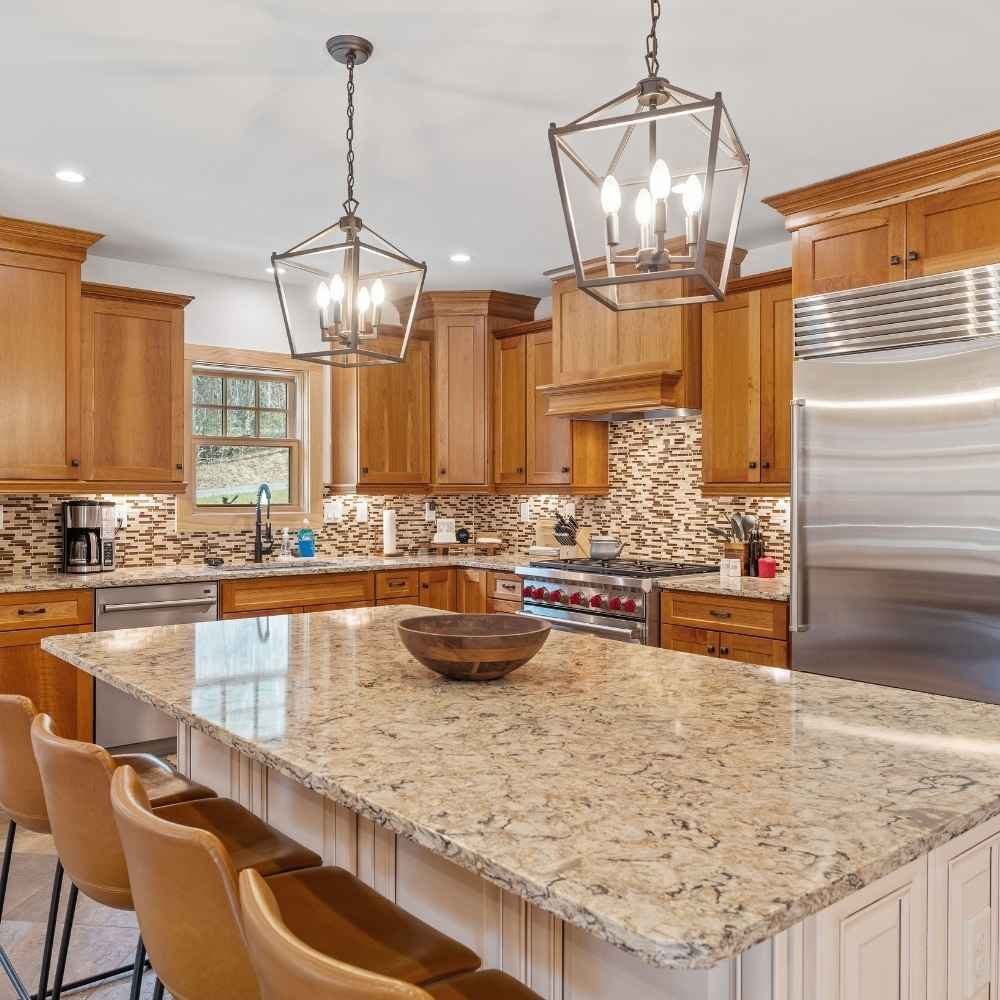
Hardest-working natural stone. Heat-proof, unique slab to slab, needs sealing once a year or so.
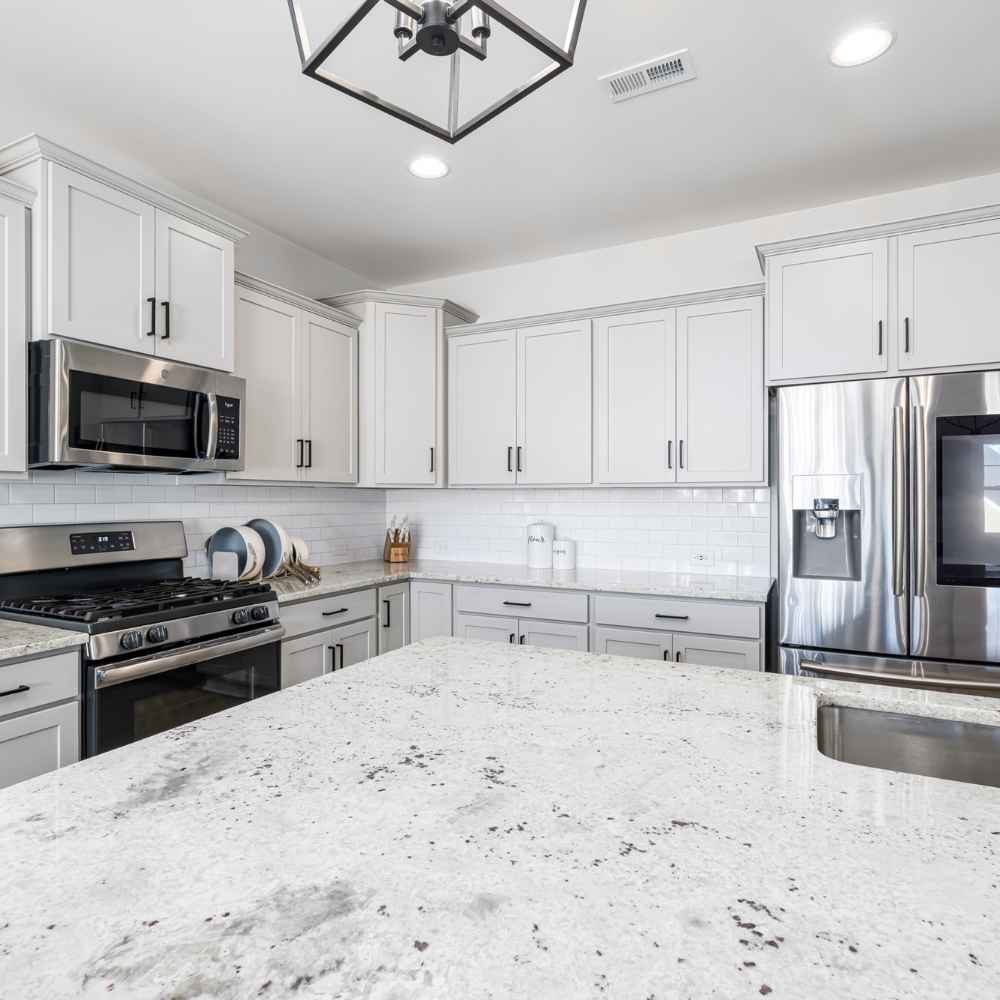
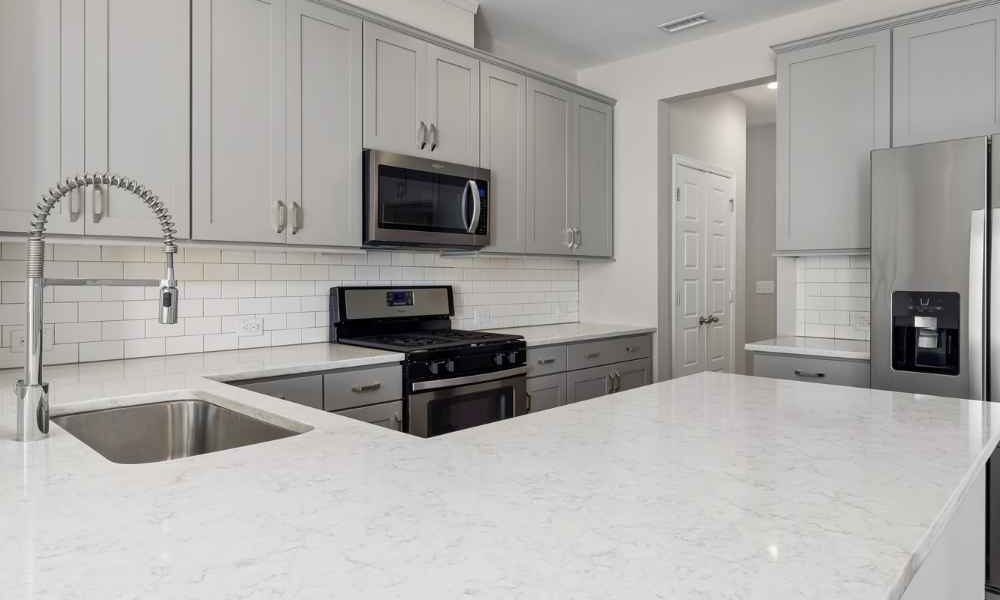
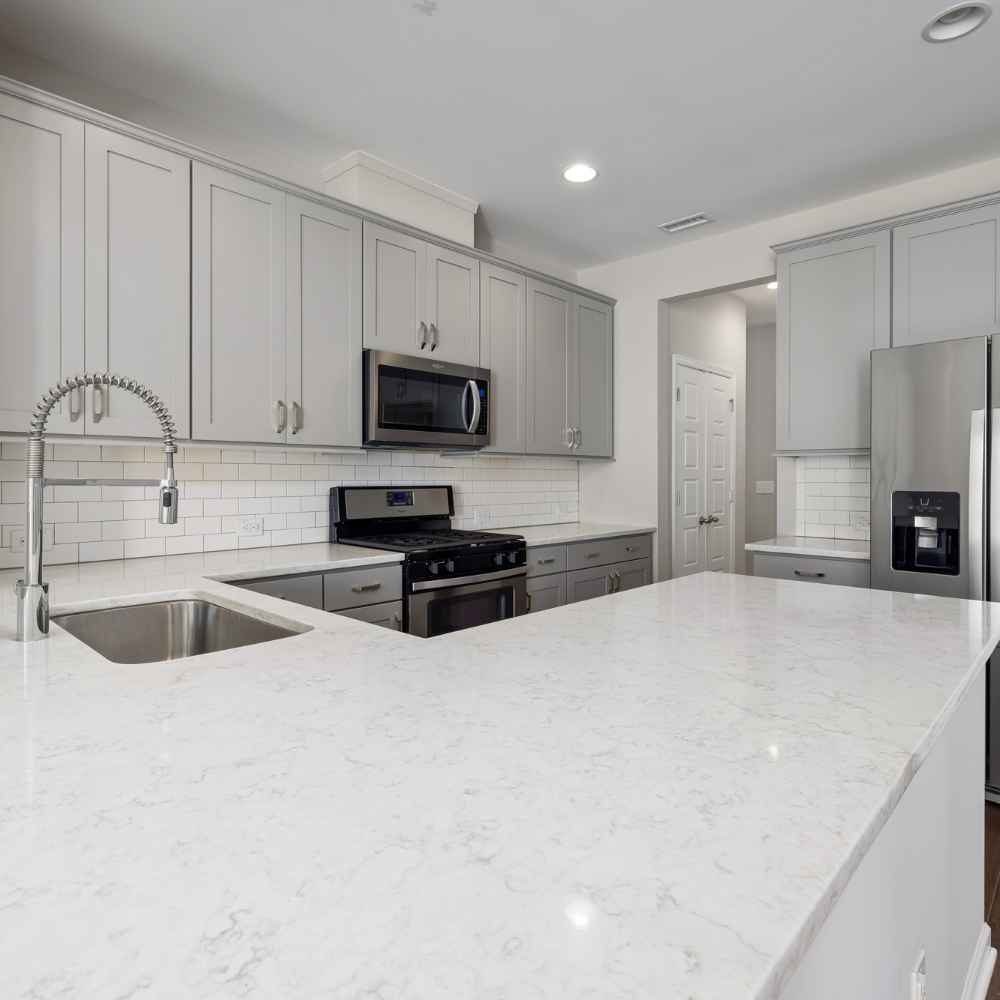
Non-porous, consistent, zero sealing. Calgary's most-requested surface — and the most forgiving.
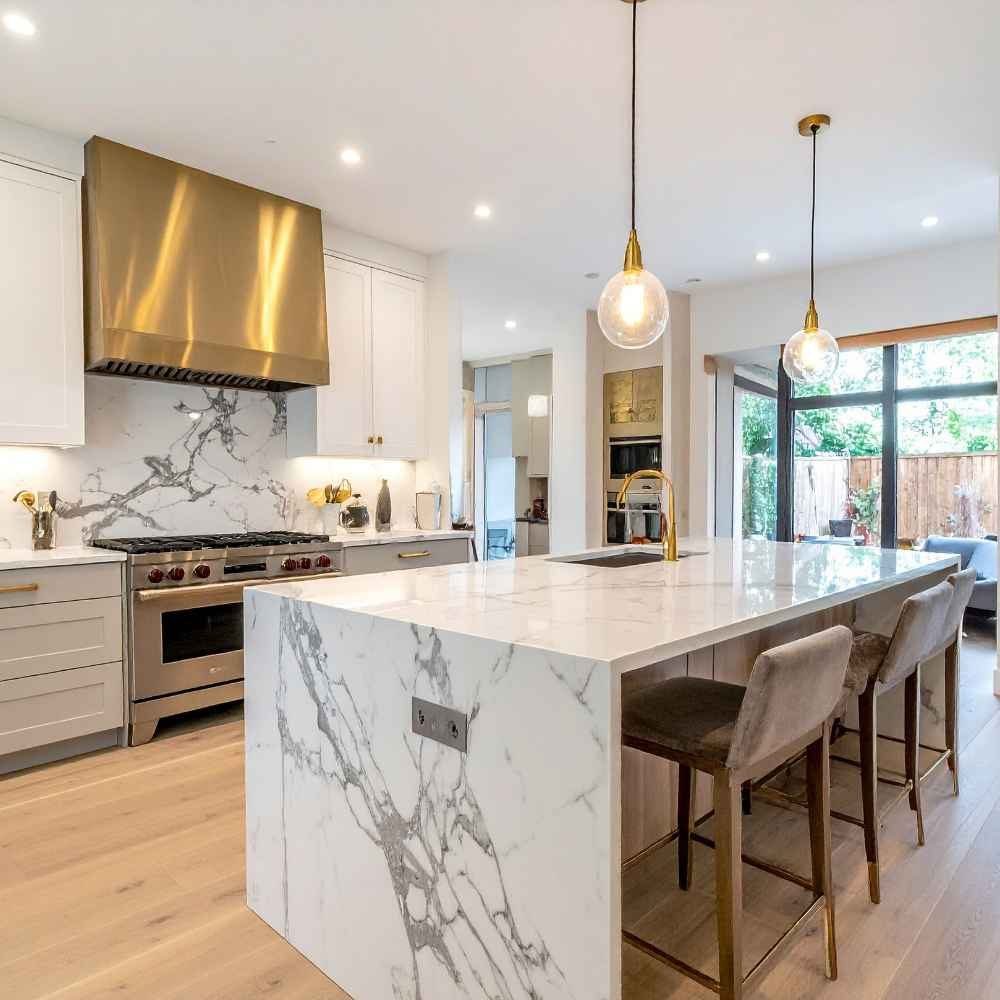
Nothing else looks like it. Etches and patinas are beautiful if you want it to age,
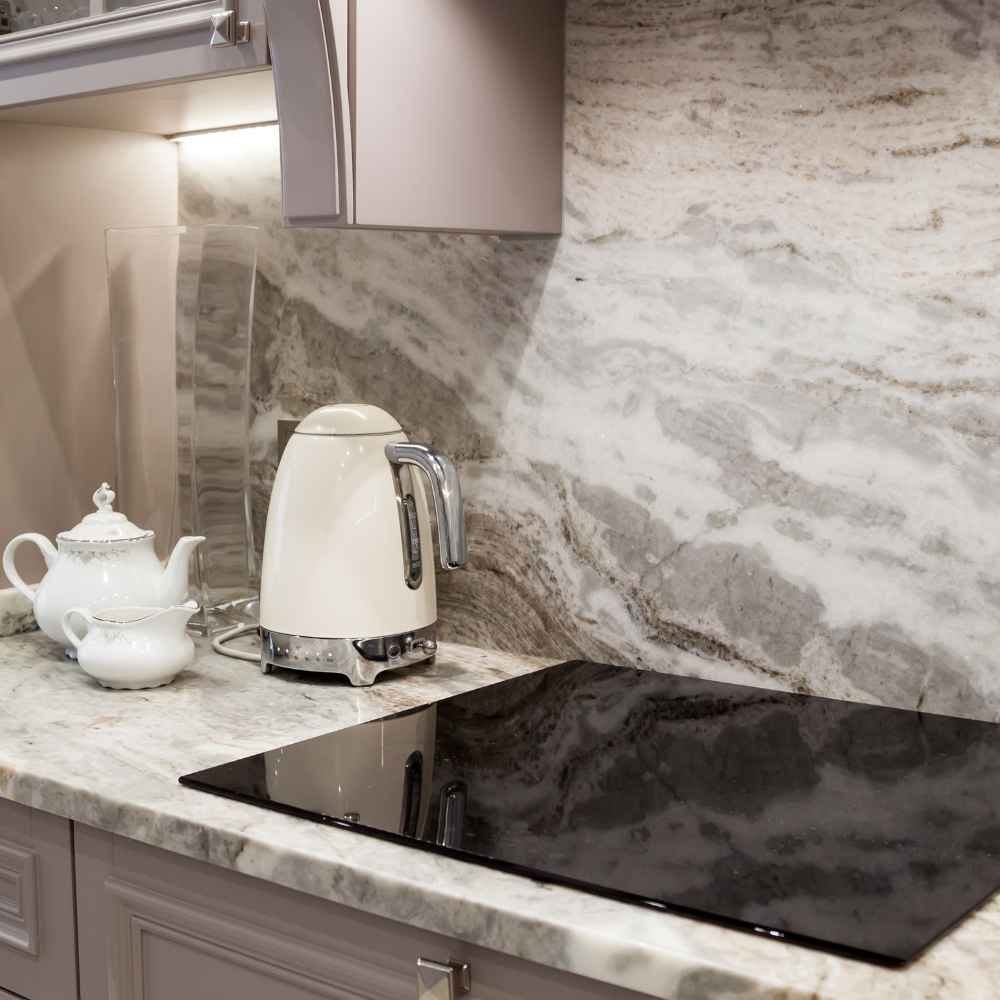
Marble's face, granite's durability. Genuinely hard — but half the market is mislabelled, so testing matters.
UV-stable, scorch-proof, only 6–12 mm thick. The right answer for outdoor kitchens and full-height slab walls.
Specification
A standard 21″ vanity cabinet takes a 22″ top with a 1″ front overhang. Some newer cabinets run 18″ deep for smaller bathrooms — measure yours rather than assuming, because the difference is very visible once installed.
2 cm is normal for vanities and keeps the cost and weight down. 3 cm reads more substantial and is worth it on a feature vanity or where you want a chunkier edge without a mitre. Either works; it’s an aesthetic call, not a durability one.
A 100 mm stone splash off the same piece is standard and protects the drywall behind the faucet. Side splashes matter where the vanity meets a wall — that’s where water actually gets thrown. Full-height slab behind a vanity is a strong look and uses surprisingly little material.
Drilled at fabrication, so we need the faucet configuration before we cut: single hole, 4″ centreset, 8″ widespread, or wall-mounted with no holes at all. Changing your mind after drilling means a new top.
Anything over about 1.8 m usually needs a seam or a jumbo slab. On a double vanity we place the seam between the two bowls where it reads as intentional rather than mid-basin.
| Surface | Heat | Stains & etching | Sealing | Outdoors | Relative cost |
|---|---|---|---|---|---|
| Granite | Excellent — set a hot pan down | Resists staining once sealed; doesn’t etch | Yearly, 10 minutes | Yes | $$ |
| Quartz | Use a trivet — resin scorches near 150 °C | Non-porous; won’t stain or etch | Never | No — UV yellows it | $$–$$$ |
| Marble | Very good | Etches on contact with lemon, wine, vinegar | Every 3–6 months | Not recommended | $$$ |
| Quartzite | Excellent | Hard; true quartzite won’t etch | Yearly | Yes | $$$–$$$$ |
| Porcelain | Excellent — genuinely scorch-proof | Zero porosity | Never | Best in class | $$$ |
Cost bands are relative to each other, not fixed prices. Slab grade moves the number far more than material does.
Calgary specifics
Calgary water is hard, and a bathroom is where that shows up fastest. Mineral deposits build around faucet bases and along the sink reveal. On quartz they wipe off with any bathroom cleaner. On polished natural stone they need a stone-safe descaler, because standard lime removers are acidic and will damage the surface — this is the single most common way a good vanity top gets ruined.
In-floor heating is common in Calgary bathroom renos and has no effect on stone tops at all. Steam from showers is likewise a non-issue. The things to watch are nail polish remover, hair dye and drain cleaner: all three will mark stone if left sitting, and none of them are covered by a sealer.
Sink choices
How it runs
01.
You see the actual slab, not a sample chip. Natural stone varies enormously across a single block, and a photo of “Black Pearl” tells you nothing about the piece that ends up in your kitchen.
02.
We laser-template after your cabinets are set and levelled. This is also when we walk you through seam placement — where the joins land, and why. Nobody should find out about a seam after it’s cut.
03.
CNC cutting, sink and cooktop cut-outs, edge profiling and polishing in our own shop. Nothing is sent out, which is why we can turn a template around in roughly ten working days.
04.
Levelling, setting, seaming and sealing, typically in a single day for a standard kitchen. Old tops removed and hauled away if you need that.
/ FAQs
Far less than people expect, because the piece is small and often comes from remnant. A standard single vanity in quartz or granite is one of the most affordable stone upgrades in a house. Ask what's on the remnant rack — that's where the value is.
Yes, and it's the best room for it. The acids that etch marble are kitchen acids. Keep nail polish remover and acidic cleaners off it, seal it every few months, and it will hold up well.
Yes, at fabrication. We need the faucet configuration before cutting — single hole, 4-inch centreset, 8-inch widespread or wall-mount. Get the faucet chosen before template.
If it's quartz or porcelain, yes — those are manufactured to consistent colour. Natural stone from a different slab won't match exactly, though we can often pull from the same block if the kitchen was recent.
2 cm is standard and perfectly durable. 3 cm looks more substantial and costs more. Neither is stronger in any way that matters for a vanity.
Usually yes. We check the cabinet is level and sound at template. Removing an old integrated cultured-marble top sometimes damages the cabinet edge, so budget a little contingency if that's what you're replacing.
Free measure and quote across Calgary, Airdrie, Cochrane, Chestermere and Okotoks. No obligation, no showroom pressure.
Crescent Granite templates, fabricates and installs custom kitchen and bathroom countertops across Calgary — in-house, on schedule, and built to outlast the reno.
Copyright © 2026 Crescent Granite