
Surrounds · Hearths · Full-height cladding
The one vertical surface in a house that gets looked at as much as a countertop — and the place a marble you’d never risk in a kitchen makes perfect sense.
A fireplace surround takes no knives, no lemon juice and no standing water. Everything that rules marble out of a kitchen is simply absent, which is why the most beautiful stone in most houses ends up here.
Three formats cover almost every job. A surround frames the firebox opening. A hearth is the horizontal slab at the base, which on many appliances is required rather than decorative. Full-height cladding runs from floor to ceiling and turns the fireplace into the room’s architecture.
One thing to establish before anything else: clearance to combustibles is governed by your fireplace appliance’s listing and by the Alberta Building Code, and those requirements dictate what can be installed and how close. Get them from your fireplace installer or the appliance manual first — we fabricate to that specification, we don’t determine it.
by material
Material decides your budget, your maintenance and roughly 80% of the final look. Room and layout come after.
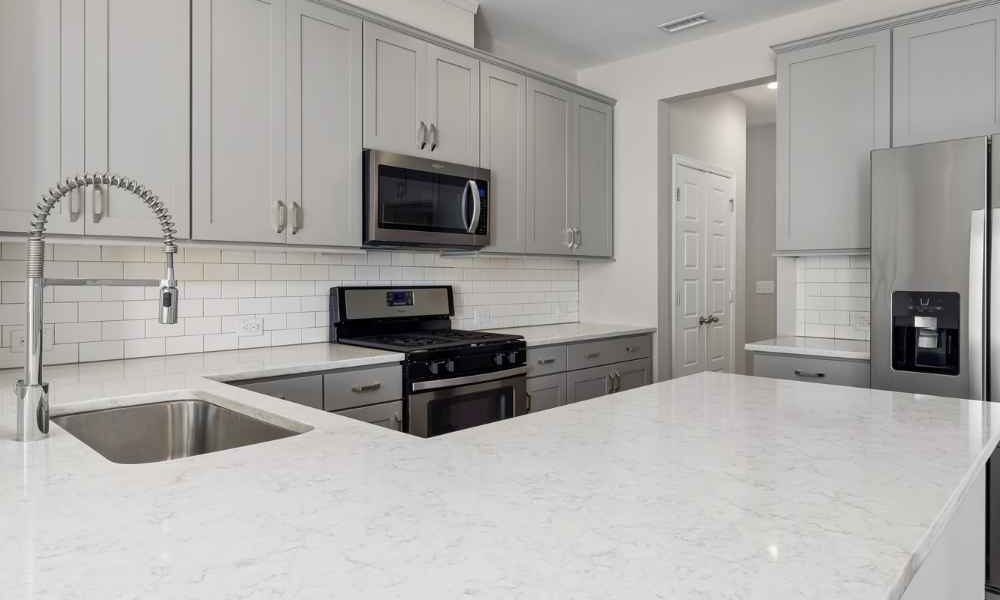
Hardest-working natural stone. Heat-proof, unique slab to slab, needs sealing once a year or so.
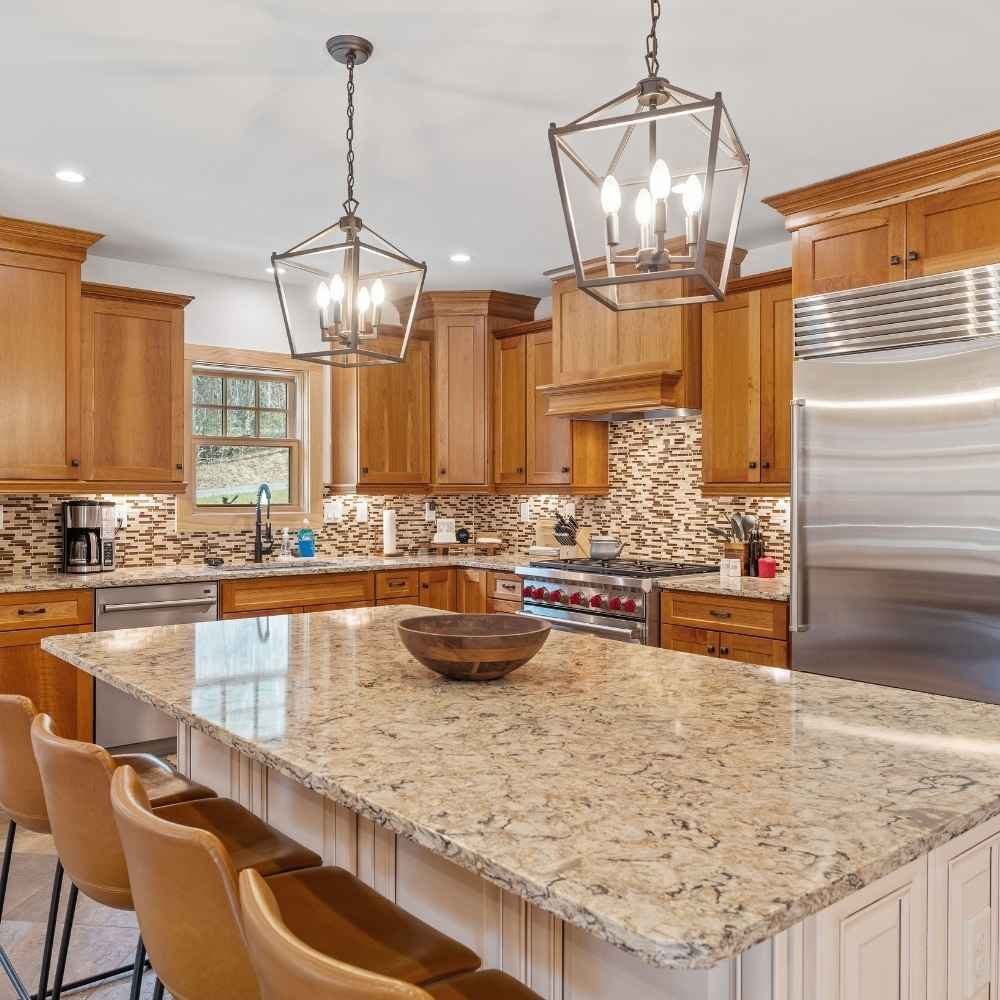
Non-porous, consistent, zero sealing. Calgary's most-requested surface — and the most forgiving.
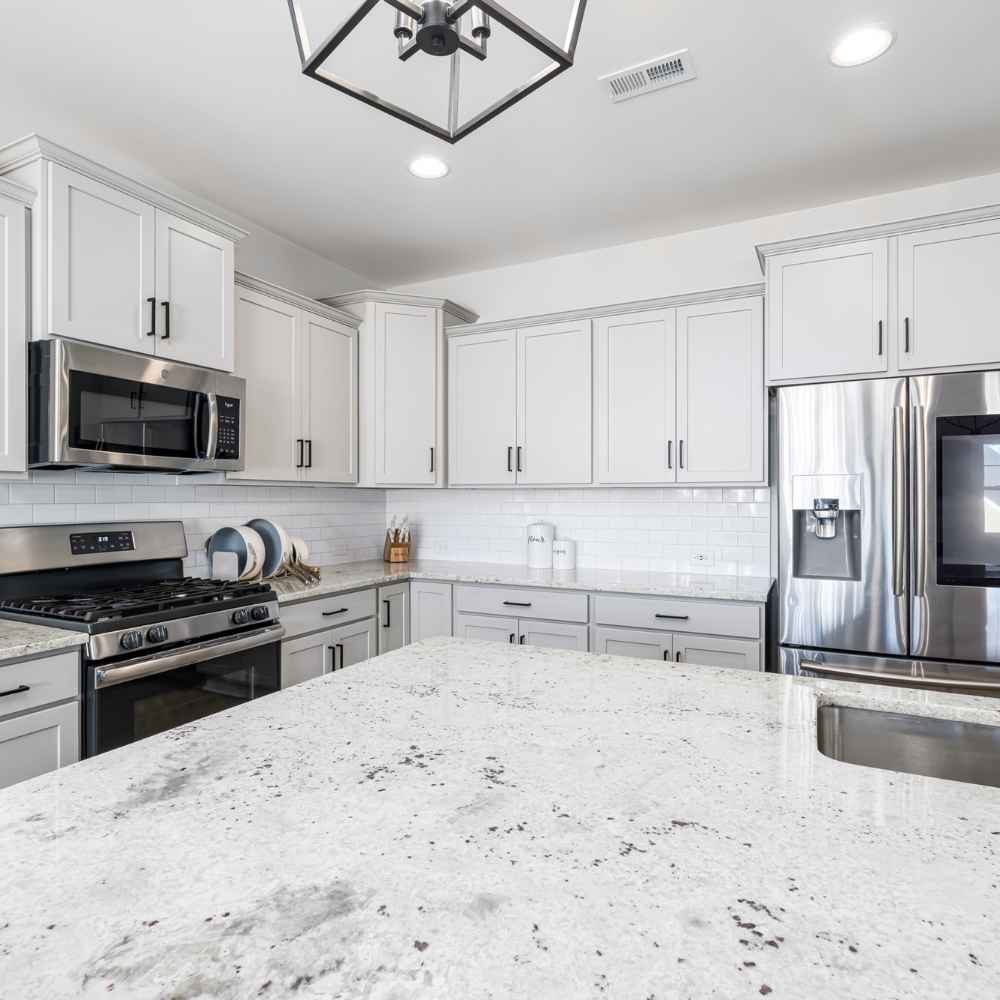
Nothing else looks like it. Etches and patinas are beautiful if you want it to age,
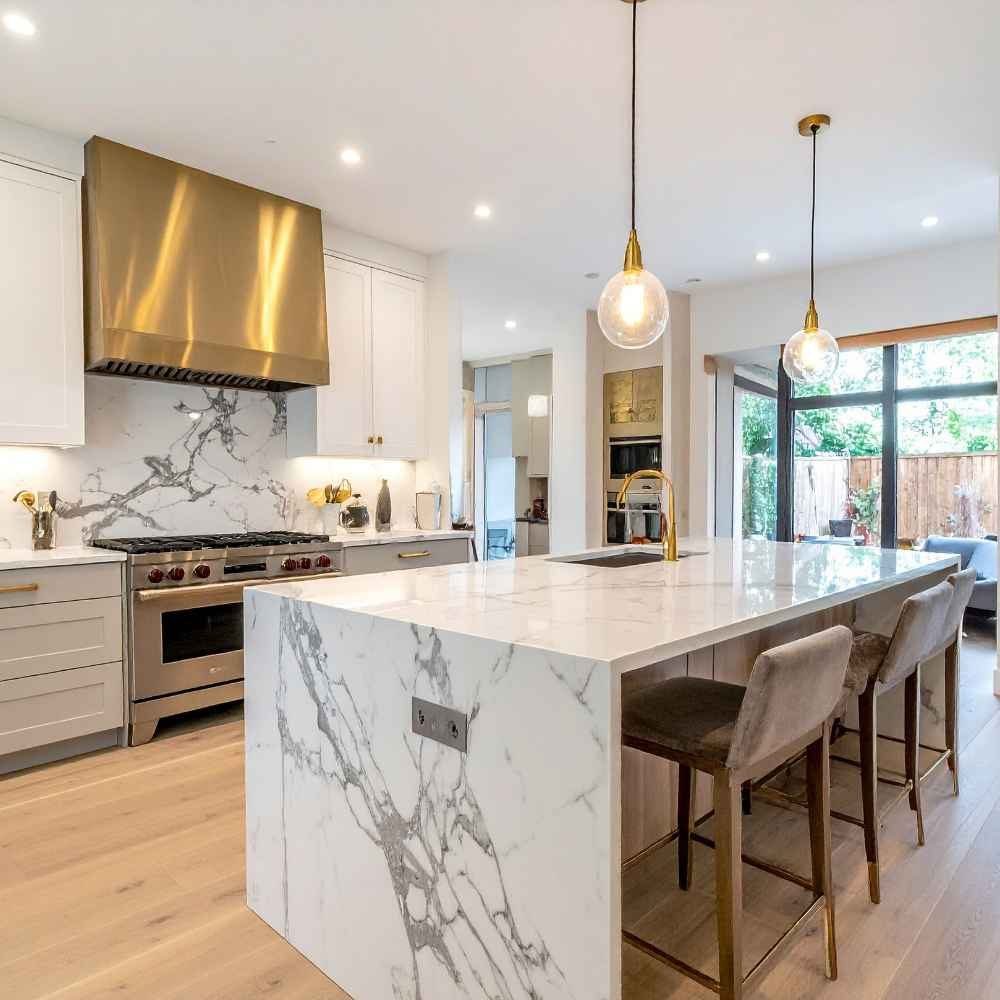
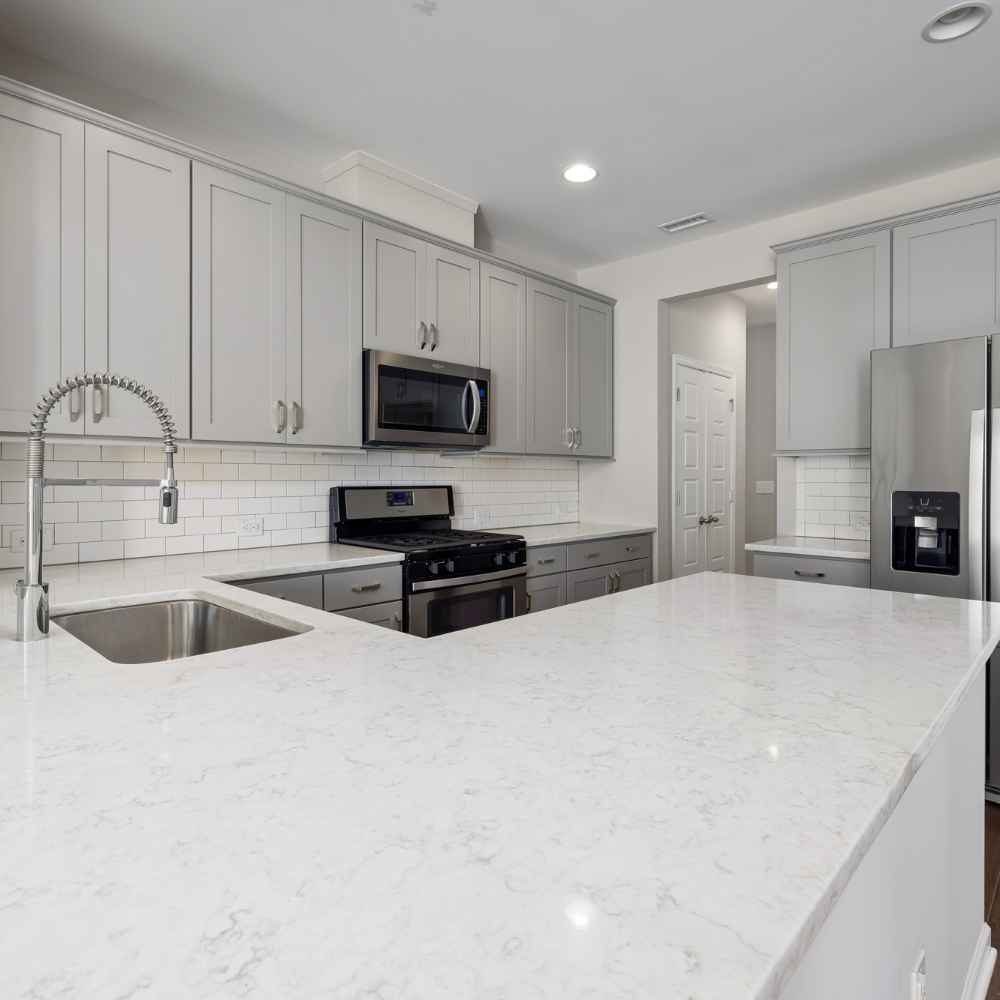
Marble's face, granite's durability. Genuinely hard — but half the market is mislabelled, so testing matters.
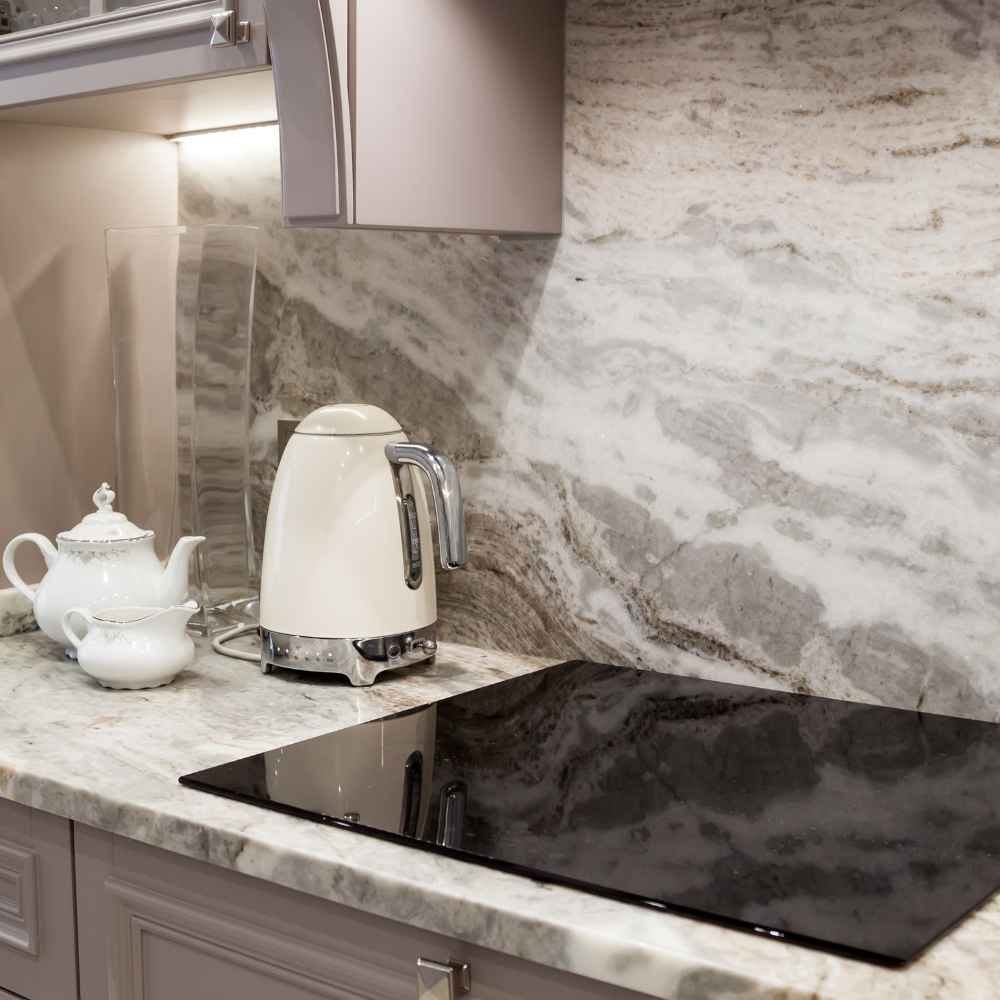
UV-stable, scorch-proof, only 6–12 mm thick. The right answer for outdoor kitchens and full-height slab walls.
Material
| Material | Suitability | Notes |
|---|---|---|
| Marble | Excellent | The classic. Heat-tolerant, and none of the acids that cause trouble in kitchens exist here. Carrara and Calacatta both work beautifully. |
| Granite | Excellent | Formed under heat; entirely unbothered by a fireplace. Leathered finishes look particularly good on a full-height wall. |
| Porcelain | Excellent | Thin, light, fired above 1200 °C. Best option for cladding over existing brick without rebuilding, since it adds almost no weight. |
| Quartzite | Very good | Hard and heat-stable, with veining that suits a feature wall. |
| Quartz | Restricted | The resin binder is heat-sensitive. Only acceptable well outside the appliance’s specified clearance, and many manufacturers restrict fireplace use — check the warranty before specifying it. |
Formats
Stone frames the opening, usually 2 cm, with a matching hearth slab at the base. The traditional approach and the most economical. Often achievable from a single remnant, which makes premium marble genuinely affordable at this scale.
Floor to ceiling, typically in large-format slabs with minimal joints. This is where porcelain earns its place — a 6 mm or 12 mm panel goes over existing masonry with almost no added load, where 2 cm natural stone on a two-storey wall becomes a structural conversation.
Two mirrored slabs meeting at a centre joint so the veining opens like a butterfly. It’s the most dramatic thing you can do with stone and the most demanding to source — the slabs must be sequential from the same block, and they have to be reserved before anything else is committed.
Practicalities
Vertical stone is mechanically fixed and adhered to a suitable substrate — cement board rather than drywall for anything of weight. On a renovation we’ll check what’s behind the existing finish before quoting, because the difference between cladding onto sound masonry and rebuilding a substrate is significant.
Stone mantels are cut from the same material as the surround and supported by concealed steel pins or a bracket. Their projection is also governed by the appliance’s clearance requirements, so the mantel depth you want and the depth you’re permitted may differ — confirm before we cut.
For cleaning, soot on polished marble comes off with a stone-safe cleaner and patience. Never use vinegar or a commercial fireplace cleaner on marble; both are acidic and will etch it permanently. Seal marble and granite surrounds annually. Porcelain needs nothing at all.
How it runs
01.
You see the actual slab, not a sample chip. Natural stone varies enormously across a single block, and a photo of “Black Pearl” tells you nothing about the piece that ends up in your kitchen.
02.
We laser-template after your cabinets are set and levelled. This is also when we walk you through seam placement — where the joins land, and why. Nobody should find out about a seam after it’s cut.
03.
CNC cutting, sink and cooktop cut-outs, edge profiling and polishing in our own shop. Nothing is sent out, which is why we can turn a template around in roughly ten working days.
04.
Levelling, setting, seaming and sealing, typically in a single day for a standard kitchen. Old tops removed and hauled away if you need that.
/ FAQs
Yes, and it's one of the best applications for it. Marble is heat-tolerant and the acidic liquids that etch it in kitchens don't exist in a living room. Keep acidic cleaners away from it and it will look excellent for decades.
That's set by your appliance's listing and the Alberta Building Code, not by the stone. Get the clearance requirements from your fireplace installer or the appliance manual and we'll fabricate to them. It varies substantially between wood-burning, gas and electric units.
Usually yes, and porcelain is the best material for it because 6 mm or 12 mm panels add almost no weight. We check the substrate is sound and flat enough first — badly bowed brick sometimes needs furring out before cladding.
Only well outside the appliance's clearance zone, and many quartz manufacturers restrict or exclude fireplace applications in their warranty. Check the specific product's documentation. Granite, marble, quartzite and porcelain are all safer choices.
A standard surround and hearth is a small amount of material and can often come from remnant, which makes it one of the most cost-effective stone features in a house. Full-height cladding and book-matched feature walls cost considerably more because of slab quantity and sourcing.
No. We fabricate and install the stone. The appliance, venting and gas connection are done by a licensed fireplace installer, and we coordinate our work around theirs.
Free measure and quote across Calgary, Airdrie, Cochrane, Chestermere and Okotoks. No obligation, no showroom pressure.
Crescent Granite templates, fabricates and installs custom kitchen and bathroom countertops across Calgary — in-house, on schedule, and built to outlast the reno.
Copyright © 2026 Crescent Granite